Writesonic Alternative: How to Choose the Right AI SEO Content Tool
Alex

AI content tools sell their plans by different units: articles, credits or sites. Two plans with similar names can differ a lot in cost.
If you are looking for a Writesonic alternative, what matters is which tool fits how you publish. This guide compares the main options on price model, publishing, SEO controls and editing, with a checklist.
What to check before leaving Writesonic
Pricing model: credits, articles per month and sites
Writesonic’s paid plans give you 15, 25 or 50 AI articles per month, so plan names tell you little. Compare alternatives by the unit that matters to you: articles, credits or sites.
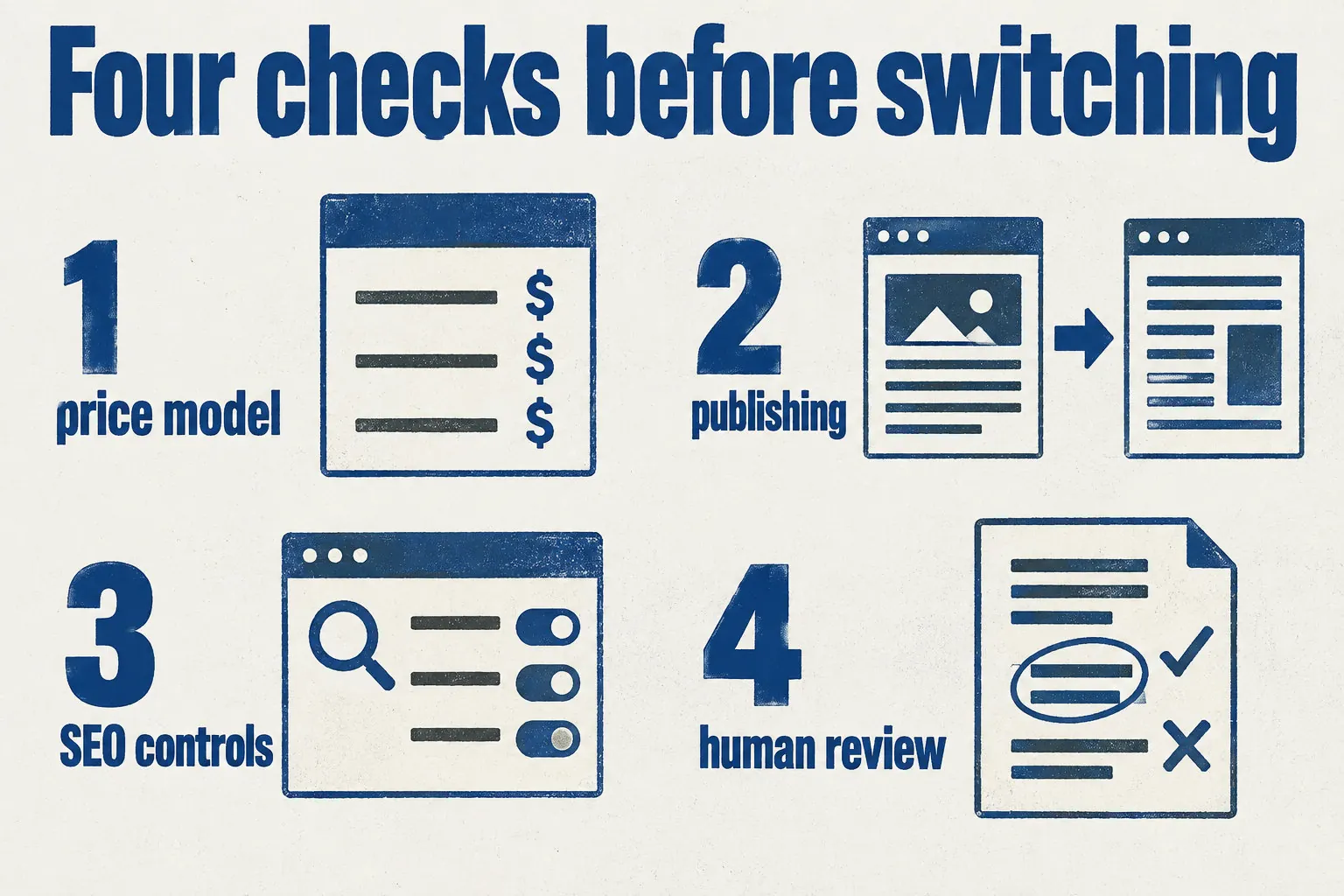
Check these three points in each plan’s price:
- How many credits one article uses.
- How many articles the plan covers each month.
- Whether it covers one site or unlimited sites.
Publishing automation: CMS connectors and scheduling
Direct, scheduled or manual handoff: know which you get. Writesonic’s one-click WordPress export is a handoff, so you publish yourself. For automatic posts, use the ai website content tool.
SEO controls: meta fields, internal links and Schema.org
Check which SEO fields a tool creates before you rely on it:
- Meta title and description
- Keywords
- Internal links
- Schema.org data
- Indexing request to Google after publication
Editing control and human review
Read every draft before it goes live. Google expects AI-assisted content to be accurate, useful and written for people, so check facts and wording first.
Languages, countries and content types
For affiliate content, see affiliate blog post formats and match these to your audience:
- 100+ languages
- 130+ countries
- Blog, affiliate, product and Discover content
Prices and plan limits change, so check each one on the vendor’s own site before you sign up.
If Arvow is on your list, see the arvow alternative comparison first, then confirm its current prices on Arvow’s site.
Writesonic alternatives at a glance
Jasper for brand voice and marketing copy
Jasper suits teams that publish campaign and brand content. Its strength is brand voice: the tool reuses your voice and your own reference material across each piece, so the wording stays consistent.
Choose it when most of your work is marketing copy rather than long SEO articles. Its copy templates cover campaigns, so a blog post is only one use. Jasper’s marketing platform fits teams that need brand voice and marketing content.

Before you choose, check Jasper’s current feature list and pricing on its own site, because both change. Test it on one brief first.
If your goal is regular articles pushed to your CMS instead, see ai content workflow tool seo for a publishing-first option.
Surfer SEO for draft optimization
Surfer SEO (surferseo.com) suits editors who refine drafts against search data. Check its current pricing first.
Frase for research and briefs
Frase starts from research and briefs built on search results. It suits teams that plan articles from what already ranks.
Scalenut for keyword research and planning
Scalenut combines keyword research with content planning, so it suits teams that build topic clusters.
Wisewand for autopilot publishing and SEO automation
Choose by job:
| Criterion | Autopilot | Editor |
|---|---|---|
| Topics | Tool picks | You pick |
| Publishing | Sent to CMS | Manual |
| Output | Regular | Per draft |
Where Wisewand fits and what it includes
Autopilot: editorial calendar and automatic publishing
Autopilot is where Wisewand does the planning. It picks and schedules the topics on a rolling 30-day calendar, then publishes about one article a day on the Starter plan.
You cannot choose or adjust those topics, so check that they fit your niche before you switch it on. Autopilot is included in Starter, Pro and Agency.
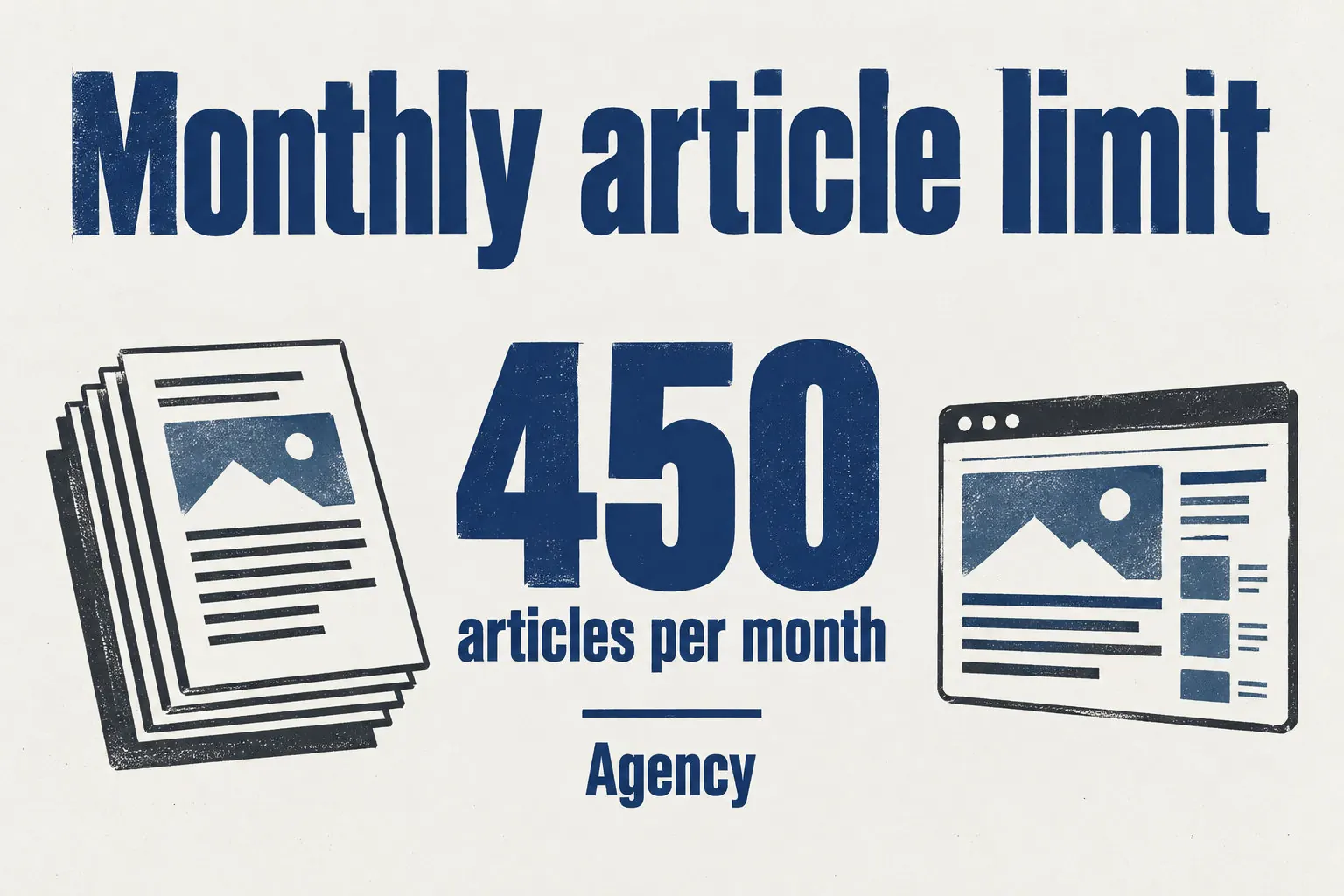
Finished articles go to WordPress, Shopify, WooCommerce, PrestaShop or a webhook. Each one includes a meta title, a meta description, keywords, internal links and Schema.org, and Google indexing is requested after publication.
For product-based articles on a Shopify store, see AI ecommerce content applications before you decide.
Automatic SEO fields and indexing request
Under autopilot, the SEO fields are filled in for you, so there is nothing to type by hand.
Visibility on Google and in AI answers
Wisewand optimizes articles for Google and for AI answers like ChatGPT. No tool can guarantee a ranking or a citation.
Shopify connector and product-based articles
For a Shopify store, pick a tool that reads your product data first: photos, titles, prices and reviews.
Integrations for developers and automation builders
Developers can connect Wisewand through its public API, MCP server, CLI, or n8n and Make workflows, which suits custom automation.
Trial, plans and credits
Wisewand counts usage in credits. One credit is one full article, images included, so check how many articles you need each month.
One client site’s 12-month results in Search Console
One site’s result is a single case, not a forecast for your blog. Measure your own results in Search Console.
Customer base and rating
Wisewand suits three jobs:
- Scheduled blog publishing
- Product-based store content
- Automated workflows for builders
Trial terms and how to test before paying
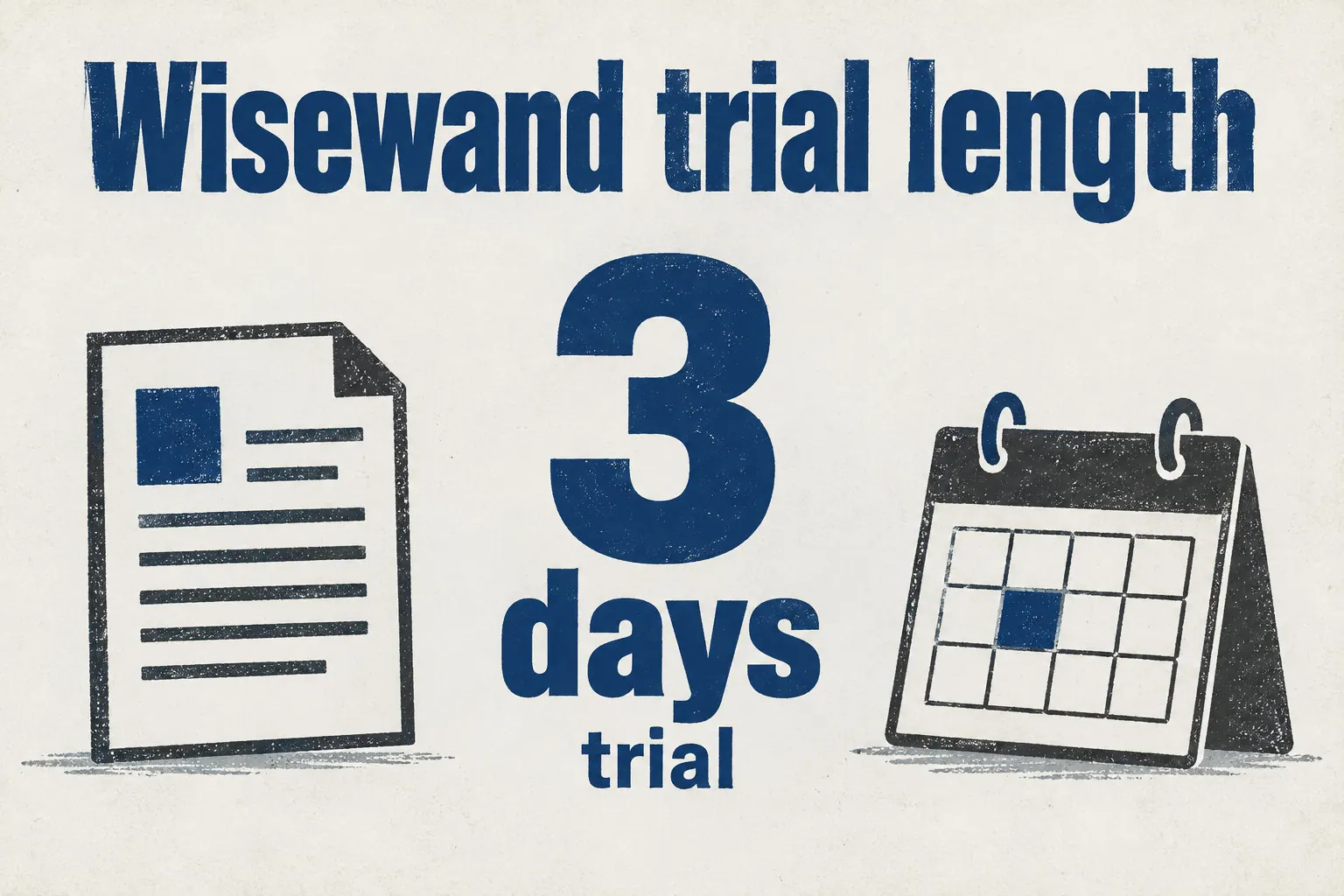
Trial terms change, so check each vendor’s current trial on its own site first. You can try Wisewand for three days for €1, with three credits on the Starter, Pro or Agency plan.
One credit makes one article. The trial is one per account and is not offered to existing clients.
Test each tool the same way: one keyword, the same brief and source list, one article per tool.
Time how long each takes to reach a publishable draft, then note the edit time, the title, the meta description, the internal links, the Schema.org fields and every manual fix. Keep the results in one sheet. If you sell products, read about ai product descriptions before you test.
How to choose the right alternative
Match the tool to the job
Start with the job, not the brand. For blog posts on a schedule, check scheduling, CMS connectors and articles per month. For autopilot publishing, see AI marketing software content creation.
For an online store, check whether the tool reads product data and has a connector for Shopify or WooCommerce. For affiliate pages, check comparison and listicle support, and how it handles links and disclosures.
For editing-first SEO, look at the editor, its optimization score and how it reads search results, as Surfer SEO and Frase do. Before you sign, confirm the price per article, credit, site or seat, and check export.
Checklist before you commit
Before you sign, check:
- Price per usage unit: articles, credits or seats.
- Publishing handoff: direct, scheduled or manual.
- SEO fields and internal links.
- Editing controls, tested on a draft.
- Export of your content.
Common mistakes when switching tools
The most common mistake is expecting a promise that no tool can make. No AI tool can guarantee a Google ranking, a first position or a citation in ChatGPT, Google AI Overviews or Perplexity.
Compare plans on credits per article, articles per month, sites and seats, not on plan names. Keep human review before publication, and check how articles reach your CMS.
Before you switch mid-campaign, export your existing content. Write down what the current tool does well, what it does poorly, and which steps you must repeat in the new one. For your blog schedule, see ai blog content strategy.
The right Writesonic alternative depends on your job, not on the brand. Compare each tool on credits per article, articles per month, sites, publishing handoff and SEO fields.
Next, check each vendor’s current pricing on its own site. Then test your shortlist on one keyword, with the same brief for every tool.
Frequently Asked Questions
Is Writesonic the only AI content tool for SEO blog posts?
No. Jasper, Surfer SEO, Frase, Scalenut and Wisewand also offer AI content or SEO content features, so you have several options for blog posts. The right one depends on the job you need the tool to do.
What should I compare when looking for a Writesonic alternative?
Compare the usage limit, the publishing steps, the SEO controls, the editing tools, the languages and the content types. Start with the usage limit, because it decides how many articles you can publish each month.
Which Writesonic alternative works best for Shopify stores?
For a Shopify store, Wisewand is the first Writesonic alternative to test, because it connects to Shopify and can use your product data in articles.
Scalenut also lists a Shopify integration. Your workflow and the controls you need should decide between them.
Can an AI content tool publish articles automatically to WordPress or Shopify?
Yes, some do. Wisewand publishes to WordPress and Shopify, and Scalenut lists automatic publishing to WordPress and Shopify on its plans.
Before you sign, check whether a tool publishes the article itself or only hands you a draft to post yourself.
How can I test a Writesonic alternative before paying?
Check each vendor’s current trial terms on its own site, then create one article on the same keyword in each tool. Compare the editing time, the SEO fields and the publishing steps before you pay.
This article also exists in French: le lire en français