AI SEO Tool for Websites: How to Choose and Automate Content
Alex

No single AI SEO tool fits every site. The market has suites, content editors, link platforms and publishing tools, and each handles a different part of the work.
Picking the wrong category means paying for features you never use. This article shows what each category automates, which one fits your role and budget, and what no tool can promise.
Which one to choose based on your use and budget
No single AI SEO tool fits every site. If your team needs keyword research, audits, rank tracking and competitor analysis in one workflow, choose an all-in-one suite.
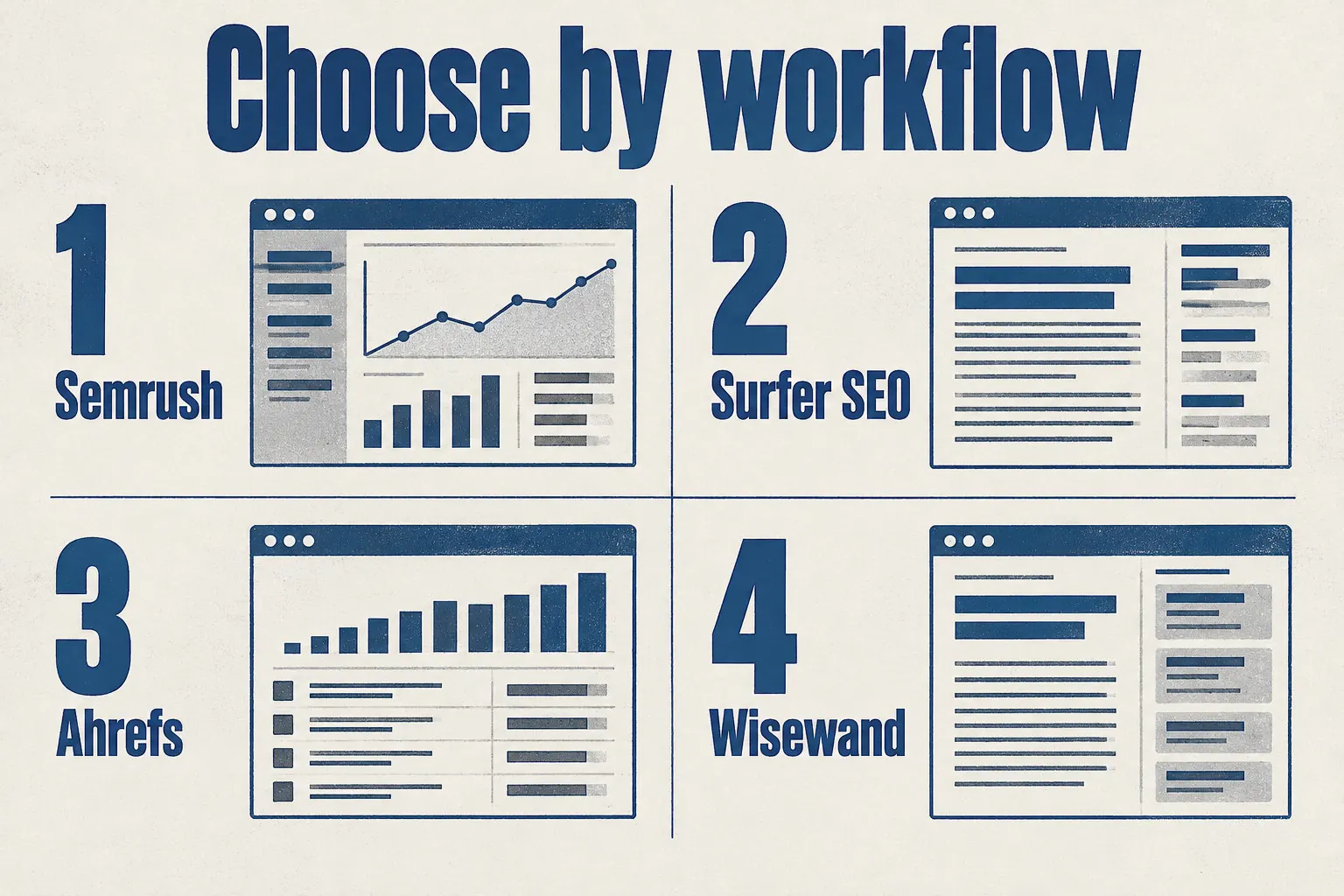
Writers who draft the text themselves need a content editor with on-page guidance. If link research matters most, pick a backlink and SERP platform.
Match your role to the tool category that fits your work, then check its price.
| Your role | Tool category | Main job |
|---|---|---|
| Analyst | All-in-one suite | Broad data on your site and market |
| Writer | Content editor | Guidance on your own draft |
| Link builder | Backlink and SERP platform | Links and competing results |
| Site owner | Automated publishing tool | Regular posts with less manual work |
Before you pay, open the vendor’s own pricing page and check the plan credits and rollover rules. Then test any tool’s advice against your Search Console data before you act on it.
If you publish on a schedule, compare AI content workflow tool SEO options first.
Semrush: the broadest all-in-one suite for analysts and agencies
Semrush is the broadest option here, built for analysts and agencies. Its toolkits cover SEO, Content, Traffic & Market and AI Visibility, all in one platform. SEO tools handle keyword research, site audits, rankings and competitor research.
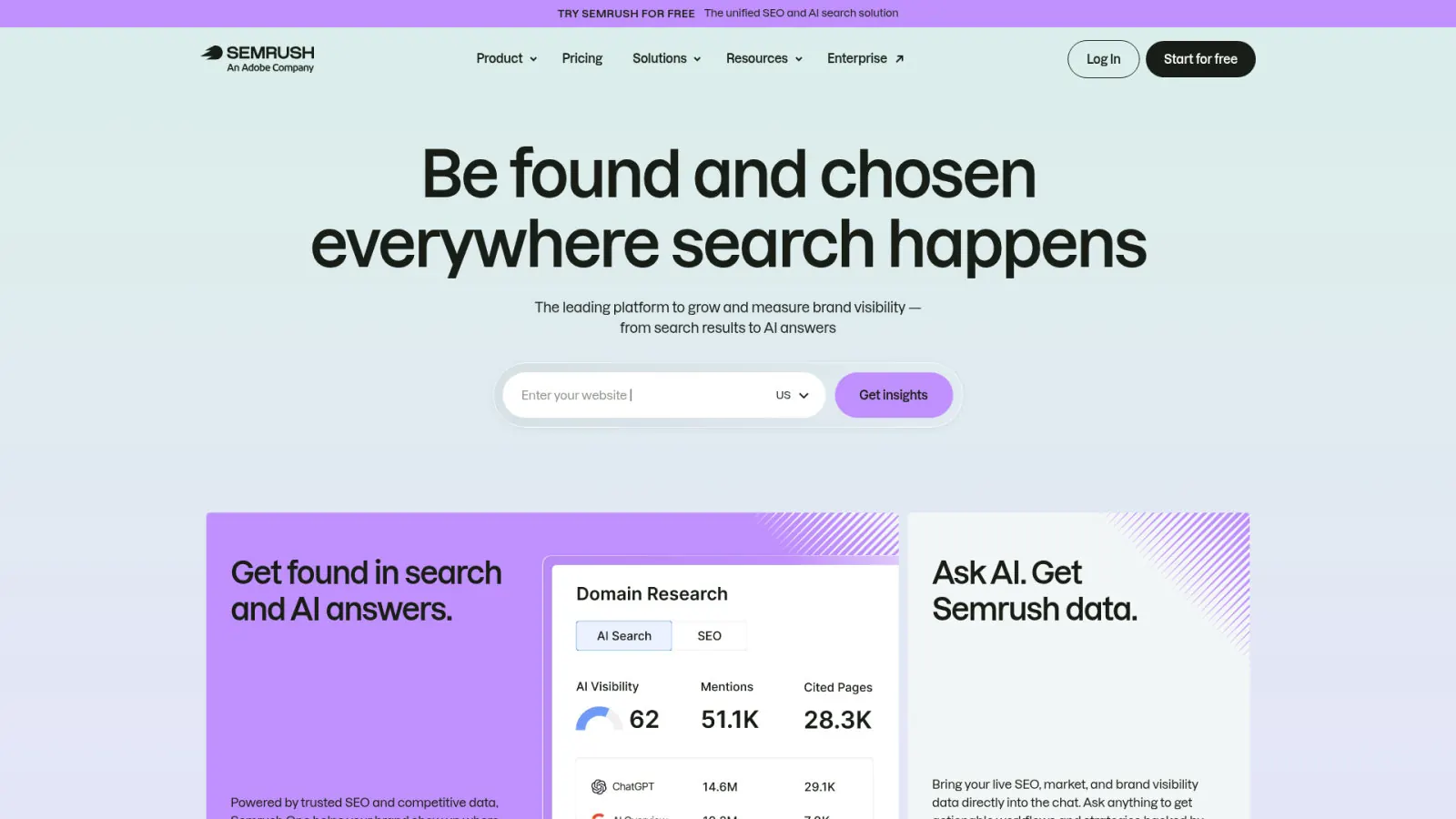
Keyword tools compare terms and competitors. Planning tools group keywords into topic clusters, which helps you organize the pages you could write. AI Visibility is separate: it tracks brand mentions across ChatGPT, Google AI, Gemini and Perplexity.
Semrush’s free plan includes one demo project and 10 reports a day, plus its Help Center and basic onboarding. Those limits are capped by the plan you choose, and paid SEO and AI Search plans set different website, keyword and prompt limits. If you need to publish on a schedule, look at the automated content generation solution before you pick a Semrush plan.
Surfer SEO: the content editor for writers who draft themselves
Surfer’s Content Editor helps writers optimize a draft around a target keyword. You write your own text, and the editor compares it with the pages already ranking for that keyword.
While you write, it gives recommendations based on those competing pages. You keep control of every sentence, so the text stays yours. For a shortlist of tools by use case, see best AI tools for blog SEO.
- You write the draft yourself.
- Surfer compares it with top-ranking pages for your keyword.
- You choose which suggestions to accept.
To compare AI writers for your own blog, see best seo optimized ai writers.
Ahrefs: backlink data and SERP research for competitive work
Ahrefs centers on three areas: backlink analysis, keyword research, and SERP research, which means studying the results Google shows for a query. Its strength is data about other sites.
These tools help teams study competitors and plan link-building work. If your goal is to see why a rival ranks, Ahrefs is the place to look. Use it before you write, not as your drafting tool.
Wisewand: publishing-focused content for sites that want regular output
Wisewand has two modes. Manual gives you control over content creation. Autopilot works on its own: it picks topics, writes one article a day and publishes it.
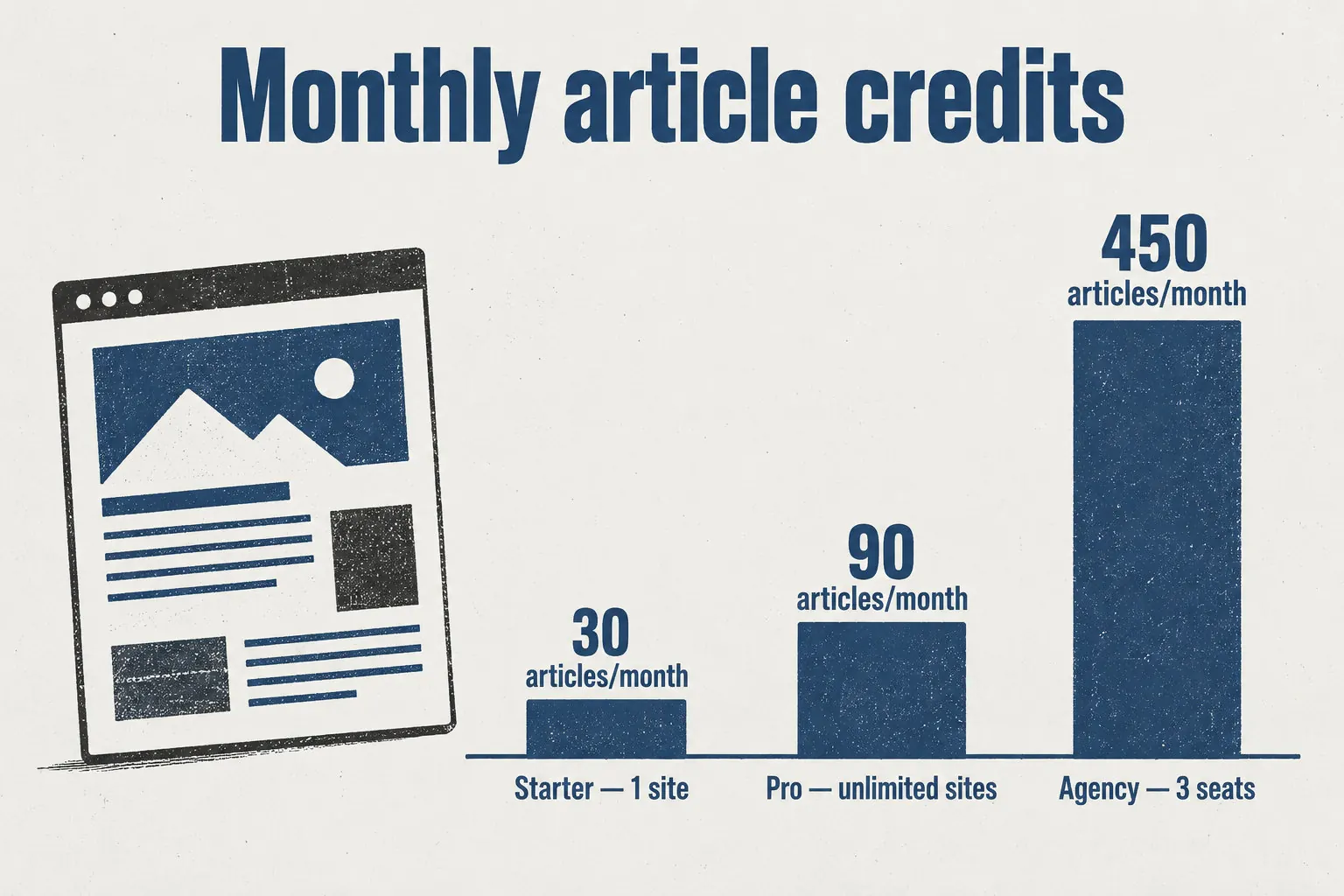
Autopilot schedules topics on a rolling 30-day calendar and skips anything your blog already covers. It is included in the Starter, Pro and Agency plans.
For a publishing schedule, see AI blog content strategy, then check what Wisewand connects to:
- Publish to WordPress, Shopify, WooCommerce, PrestaShop or a webhook.
- Create blog, product, category and affiliate content, plus Discover articles.
- Add meta titles, descriptions, keywords, internal links and Schema.org markup.
- Developers use the REST API or the MCP server.
The trial costs €1 for three days and three credits, then your chosen plan starts. Autopilot writes one article a day, so Starter’s 30 credits last about one month. Before you try Wisewand, check your publishing rate against the credits your plan includes.
Google Search Console: the free check every tool should match
Search Console reports clicks, impressions, click-through rate (CTR) and average position for your Google results. CTR is clicks divided by impressions.
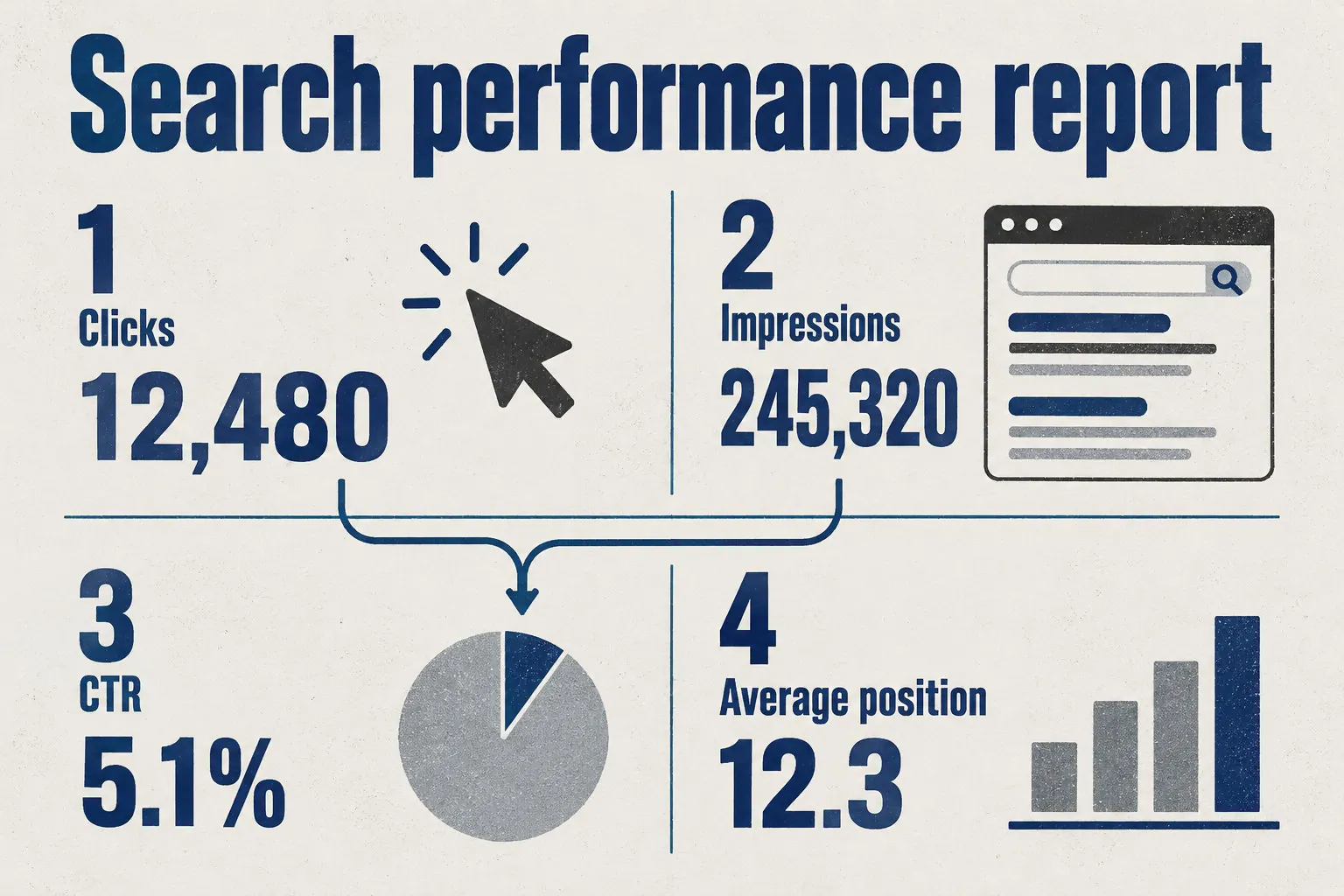
You can split each number by query, page or country. Check any tool’s advice against these numbers first. For a tool that fits your workflow, see best web writing tools seo.
Find AI Overviews and AI Mode traffic this way:
- Open the Performance report under the Web search type to see this traffic.
- Open the Generative AI performance report to see how people find you.
- Make sure pages are indexed and eligible for a snippet, and see the Google Search documentation for rules.
Open the page the tool flags in Search Console.
Compare its clicks and impressions for the same dates, before and after.
Remember that third-party scores are estimates, not Google data.
For ecommerce sites, compare options in best AI tools ecommerce SEO before you pick one.
Pick the tool for your job, not its feature list. Analysts need a suite, writers need a content editor, link builders need a backlink platform, and scheduled publishers need an automated publishing tool.
No tool guarantees rankings, so test every suggestion against your Search Console data. Next, note your role and monthly post count, then check pricing for that category.
FAQ
What is an AI SEO tool for websites?
An AI SEO tool for websites uses AI and search or site data to help you find topics, prepare or optimize your pages, and in some cases publish content.
Features differ from tool to tool, so check each tool’s feature list before you buy.
How does AI SEO software differ from a traditional SEO suite?
AI SEO software helps you draft or optimize content, and it tracks your visibility in AI answers. A traditional SEO suite focuses on keyword research, site audits, backlinks and rank tracking.
Can an AI SEO tool publish articles to WordPress or Shopify automatically?
Yes, some AI SEO tools can publish articles to WordPress or Shopify for you. Wisewand does both, and it also publishes to WooCommerce, PrestaShop and a webhook.
Being published does not mean ranking, though: no tool can promise that your posts will rank on Google.
Do AI-generated articles rank on Google?
Yes, Google can show AI-assisted content in Search if the page meets its Search Essentials and spam policies.
Who wrote it does not decide the result. No tool can promise rankings or citations in AI answers, so check each page in Search Console.
What should I check before choosing an AI SEO tool?
Check three things: the job you need done, the platform your site runs on, and whether the plan’s credits cover the number of posts you publish each month.
If you want automatic publishing, confirm the tool connects to WordPress or Shopify before you pay.
How does Wisewand’s trial work?
Wisewand’s trial lasts three days and costs €1. It includes three credits on the plan you select, and that plan starts once the trial ends. You can run one trial per account.
This article also exists in French: le lire en français